

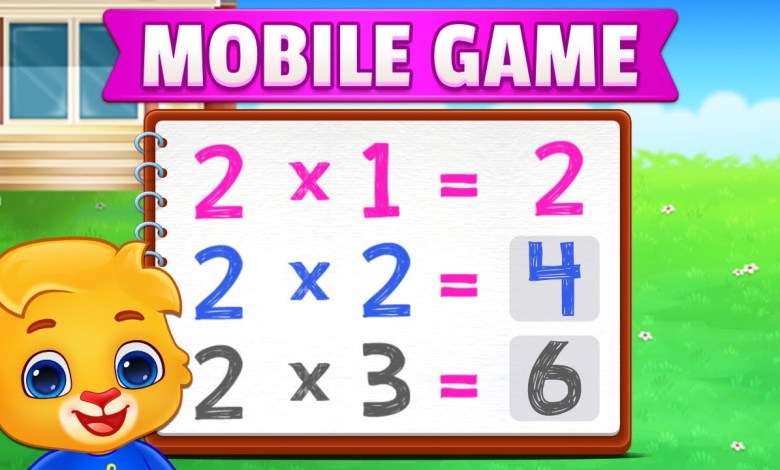
Along The Road Of Studying Mathematics, Multiplication Games And Knowledge Of The Multiplication Symbol Are Rather Important In Enabling Pupils To Easily And Fun Grasp Basic Ideas. Games Are A Great Way For Children And Young Learners To Learn Since They Mix Enjoyment With Teaching, Thereby Making Even Difficult Subjects Like Multiplication Interesting.
The Value Of Realizing And Applying The Multiplication Symbol, The Ways In Which Multiplication Games Improve Learning, And The Best Tools And Resources To Teach Multiplication Abilities Will Be Discussed In This Paper. We Will Also Respond To Some Often Asked Questions On This Subject By Teachers And Parents.
The Value Of Early Math Multiplication
Among The Four Basic Operations In Mathematics Is Multiplication. It Develops Not Just On The Idea Of Repetitive Addition But Also Prepares One For More Complex Subjects Such Geometry, Fractions, And Algebra. Children Who Can Multiply Develop The Confidence To Quickly And Effectively Tackle Practical Challenges.
For Many Kids, Though, Knowing How The Multiplication Symbol Operates Or Remembering Multiplication Tables Can Seem Monotonous Or Daunting. Multiplication Games Are Therefore A Great Teaching Tool.
What Are Multiplicity Games?
Interactive Tools—Digital And Physical—That Let Kids Practice Their Multiplication Skills In An Interesting And Entertaining Way Are Multiplication Games. These Games Are Meant To Make Arithmetic Less Scary And More Fascinating. They Could Include Downloadable Worksheets, Mobile Apps, Board Games, Internet Quizzes, Or Classroom Group Tasks.
These Games Help Kids See Math Problems, Grasp Patterns, And Remember Facts Longer By Including Images, Audio, And Narrative Components.
How May The Multiplication Symbol Support Learning?
Mathematical Language Mostly Consists On The Multiplication Symbol (× Or *). It’s The Indication For Students To Multiply Numbers. Knowing When And How To Apply This Sign Helps Kids Properly Understand And Solve Challenges.
Consider:
- 3 × 4 Means Three Groups Of Four.
- 3 * 4 Is Replaced In Various Programming Or Calculator Environments.
Early On Familiarity With The Multiplication Sign Helps Teachers Create The Conditions For Improved Learning In Both Conventional And Digital Contexts.
Various Multiplication Game Forms
The Following Is A List Of Several Multiplication Games Designed To Enable Students Interact Creatively With Math:
Flash Card Games
Youngsters Flip Flash Cards Featuring Multiplication Questions On One Side And Answers On The Other. This Aids In Quick Memorization.
Apps For Online Multiplication
Apps Ranging From Prodigy, Times Tables Rock Stars, And Splashlearn Use Animated Characters And Quizzes To Teach Arithmetic In Game-Like Environments.
Games Onboards
Group Projects And Classroom Entertainment Benefit Much From Classic Games Like “Multiplication Bingo” Or “Math Jeopardy”.
Games Of Memory Match
These Games Improve Memory And Arithmetic Abilities By Requiring Matching Multiplication Problems To Their Accurate Solutions.
Timed Tests
Children Who Compete Against The Clock Are Driven To Rapidly And Precisely Recall Facts.
These Resources Provide Children The Best Of Both Worlds By Combining Interactive Learning Techniques With The Multiplication Symbol’s Power.
Advantages Of Learning Via Games Of Multiplication
Let’s Review Some Fundamental Advantages Of Applying Multiplication Games For Education:
- Enhanced Engagement: Games Inspire Students To Practice More By Their Inherent Appeal.
- Improves Retention: Interactive Learning Helps To Remember Multiplication Knowledge Over Long Terms.
- Promotes Problem-Solving: Games Frequently Show Multiplication As A Real-Life Event, Therefore Guiding Children Toward Application.
- Instant Feedback: Digital Games Give Learners Rapid Scoring So They May Find And Correct Errors.
- Lessens Math Anxiety: Games Make Studying Low-Stress And Fun, So Helping To Lower Dread Of Arithmetic.
How Might One Properly Teach The Multiplication Symbol Effect?
Mastery Of Multiplication Depends On A Knowledge Of The Multiplication Symbol. These Techniques Help To Properly Teach It:
- Use Visual Aids: Show The Sign (×) In Big Fonts And Make Use Of Visually Striking Flashcards.
- Real-Life Examples:Real-Life Illustrations Demonstrate How Multiplication Is Applied In Shopping (E.G., Purchasing Several Objects) Or Cooking (E.G., Double Recipes).
- Different Formats: Teach That Multiplication Might Show Out As X, *, Or Even With Parenthesis (E.G., 3(4) = 12).
- Practice In Sentences:Work In Sentences Using Word Problems Such “A Basket Has Five Apples.” There Are Three Baskets; How Many Apples Are There? To Make The Symbol Relevant In Actual Life.
- Activities With Symbols: Make Sure The Activities Chosen Also Highlight And Make Use Of The Multiplication Symbol So Kids Link The Sign With The Activity.
Best Online Resources for Multiplication Games
Platform Name Features Age Group Prodigy Math Game Game-based curriculum 6-12 years SplashLearn Fun characters, step-by-step lessons 5-10 years Multiplication.com Tons of mini-games focused on times tables All Ages CoolMath Games Free interactive math puzzles 7+ years Math Playground Video games + worksheets 6-12 years These platforms use the multiplication symbol frequently and visually, reinforcing both concept and function in every game session.
Faqs About Multiplication Games And Symbols
Q1: At What Age Ought Children To Begin Learning Multiplication?
A: Most Kids Start Learning Multiplication In Second Or Third Grade, About Between The Ages Of Seven And Nine. Early On In Playful Activities, Introducing Multiplication Games Can Provide A Firm Basis.
Q2: How Can I Assist In The Understanding Of The Multiplication Sign By My Child?
A: Show The Multiplication Symbol In Motion Often Using Images, Common Sense Examples, And Games. Stress That It Denotes “Groups Of,” Or Repeated Addition.
Q3: Do Internet Multiplication Games Outlive Offline Ones?
A: Both Have Value. Online Games Give Engagement And Tracking; Offline Games Give Hands-On Experience. The Best Mix Is Both.
Q4: A Child Should Practice Multiplication How Often?
A: Daily 10 To 15 Minute Brief Sessions Using Multiplication Games Can Greatly Increase Accuracy And Recall.
Q5: Are Classroom Applications For Multiplication Games Possible?
A: Surely! Many Times, Teachers Include Them Into Math Stations, Homework, Or Revision Sessions. They Advance Collective Projects And Fierce Competition.
Conclusion
Learning Multiplication Need Not Be Monotonous Or Demanding. Multi-Digit Games Let Kids Approach Arithmetic With Interest And Inquiry. Familiarizing Students With The Multiplication Sign Is Equally Crucial Since It Connects The Idea With Its Implementation.


